PLN UIP3BB
A property and kos management platform for owners and tenants — schedule management, payment tracking, activity logs, and tenant communication across web and Android.
Running a kos or a rental property in Indonesia is often described as "passive income." In practice, it's anything but passive.
There are tenants to track, payments to follow up, maintenance requests to manage, room availability to monitor, complaints to address, and rules to enforce — all while trying to maintain good relationships with the people living under your roof. Most property owners handle this across a combination of WhatsApp chats, physical notebooks, spreadsheets, and memory. It works, barely, until it doesn't.
The moment a property owner has more than a few units, or manages multiple properties, the informal system starts to collapse. Payments get missed. Complaints get lost. Schedule conflicts appear. And the relationship between owner and tenant — which should be straightforward and professional — starts to fray under the weight of poor information management.
Hunivo was built for that moment.
Hunivo is a property management platform that puts everything a kos owner or rental property manager needs into a single, organized space — accessible from a computer or an Android phone.
Four core areas define the product:
Schedule Management — room availability, move-in and move-out dates, contract renewal timelines. Everything visible in one place, nothing forgotten.
Activity Tracking — a log of what's happening across properties: maintenance completed, inspections done, issues reported and resolved. A running record that builds accountability on both sides.
Payment Management — monthly payment tracking, due date reminders, payment history per tenant, and overdue alerts. No more awkward follow-ups based on memory. The system knows, and it tells you.
Tenant Communication — a built-in channel for tenants to submit requests, complaints, or questions — and for owners to respond — all documented, all tied to the relevant room or property.
Hunivo's users sit on two sides of the same relationship, and both sides have to feel like the product is working for them.
For the property owner, Hunivo needs to feel like clarity — a system that gives them control, visibility, and peace of mind without demanding that they become a software power user. Many kos owners are not digitally native. The platform had to be simple enough for first-time adoption and powerful enough to be worth adopting.
For the tenant, Hunivo needs to feel fair and transparent. A tenant who can see their payment history, submit a maintenance request and track its status, and communicate directly with their owner — without ambiguity — is a tenant who feels respected. That feeling matters enormously for retention and for the quality of the living environment.
Designing for both users simultaneously meant resisting the temptation to optimize purely for the owner — the more technically engaged user — at the cost of the tenant experience.
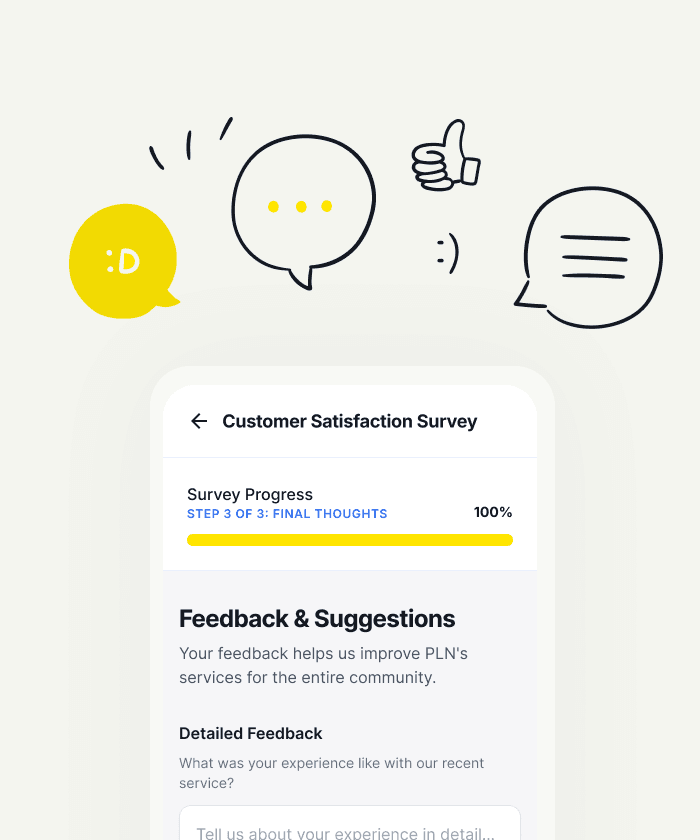
The Android application added its own constraint: the mobile experience had to work for tenants who may only ever interact with Hunivo on their phone. Every flow — submitting a complaint, checking a payment receipt, messaging the owner — had to be executable with one hand, in under a minute.
We designed Hunivo around two entry points: the owner's dashboard on web, and the tenant's experience on Android.
The web platform was built for property owners who need breadth — multiple properties, multiple units, multiple tenants, all in one view. The dashboard was designed to surface what needs attention first: overdue payments, pending maintenance requests, upcoming renewals. An owner should be able to open Hunivo and know, within ten seconds, what requires action today.
The Android app was designed for immediacy. Tenants don't need a full management system — they need quick access to their specific situation: their room, their payment status, their requests, their owner. The navigation was kept intentionally minimal, and every key action was reachable in two taps or fewer.
The payment tracking system was built to be proactive, not reactive. Automated due date reminders, payment confirmation flows, and overdue escalation paths mean that the awkward "have you paid yet?" conversation becomes less necessary — the system handles the nudge professionally, before the human relationship has to carry that weight.
The activity and communication log was designed to build a running record over time — every maintenance request, every payment, every message — creating a history that protects both parties and removes ambiguity from any future dispute.
Hunivo turns what was an informal, scattered operation into a managed, documented, professional one — without requiring property owners to overhaul the way they think about running their property.
For owners, the result is control: knowing exactly who has paid, who hasn't, what needs fixing, and what's coming up — without relying on memory or a WhatsApp group chat they have to scroll back through.
For tenants, the result is clarity: a fair, documented record of their tenancy, and a direct, professional channel to communicate with their owner.
As an internal product, Hunivo represents our conviction that the property management space in Indonesia — particularly the kos segment — is underserved by existing tools. The opportunity is real, the user pain is documented, and the product is built to earn daily use from both sides of the relationship.
| Feature | Platform |
|---|---|
| Room & occupancy schedule management | Web + Android |
| Tenant payment tracking & reminders | Web + Android |
| Maintenance & activity log | Web + Android |
| Tenant–owner communication channel | Web + Android |
| Multi-property management | Web |
| Due date alerts & overdue escalation | Web + Android |